Avoid hidden rubbish collection charges in Stockwell
Posted on 13/10/2026
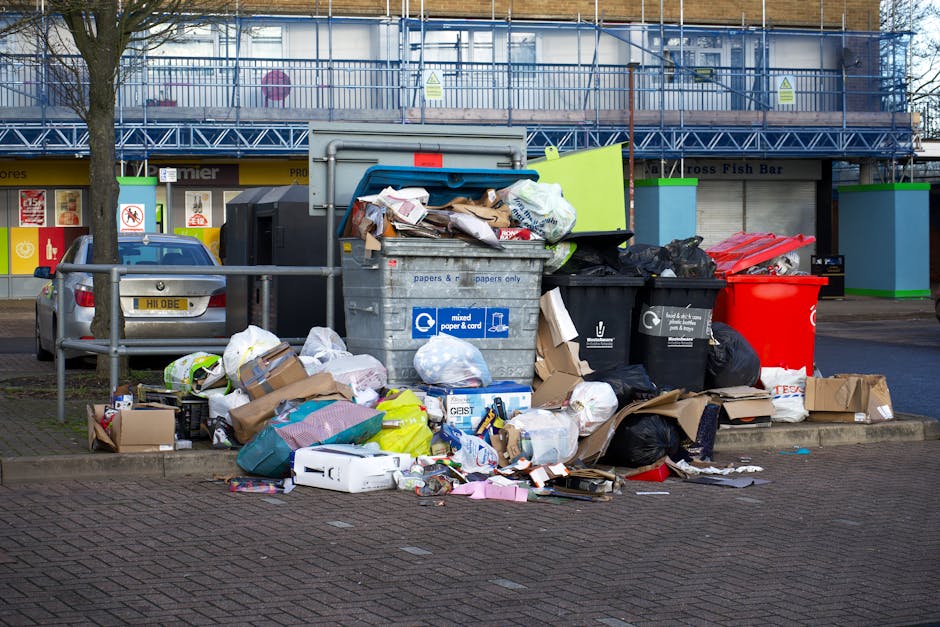
Hidden fees are the bit nobody enjoys. You book a rubbish collection, expect a tidy price, and then the final bill creeps up because of call-out extras, access issues, or vague "disposal" charges. If you want to avoid hidden rubbish collection charges in Stockwell, the good news is that most surprises can be spotted before you agree to anything. It just takes a clear eye, a few smart questions, and a provider that is willing to explain things plainly.
This guide breaks down how rubbish collection pricing usually works, where the sneaky add-ons tend to hide, and how to compare quotes without getting caught out. It is written for people dealing with everyday clear-outs, landlord jobs, office waste, renovation mess, and those awkward piles that seem to appear after a busy weekend. Truth be told, once you know what to look for, it gets a lot easier.
In Stockwell, where access can be tight, parking can be awkward, and properties range from compact flats to busy commercial spaces, pricing should be transparent from the start. Let's get into it.
Why Avoid hidden rubbish collection charges in Stockwell Matters
Hidden charges are not just annoying. They make it harder to compare providers fairly, and they can turn a simple clear-out into a stressful one. If you are trying to manage a household budget, keep a landlord account clean, or stay within a business expense plan, unclear rubbish collection pricing can throw everything off. Nobody wants a quote that looks sensible at 9 a.m. and somehow balloons by lunchtime.
In Stockwell, the risk can be even higher because collection jobs often come with real-world complications. Think about basement flats, top-floor walk-ups, narrow terraces, permit-controlled streets, and roads where loading takes longer than anyone hopes. If a company does not explain how those factors affect the price, you may only discover the extra cost when the team has already arrived.
It matters for trust too. A transparent rubbish collection service gives you confidence to book again, recommend them, and plan properly for the next job. That is especially useful for repeat work such as office clearances, regular waste removal, or moving-day debris. And honestly, peace of mind has value all by itself.
Expert summary: The cheapest quote is not always the cheapest job. If pricing is vague, the real cost usually shows up later as an access fee, labour surcharge, or disposal add-on. Clear pricing is what keeps the final bill honest.
How Avoid hidden rubbish collection charges in Stockwell Works
Most rubbish collection services price jobs using a mix of volume, weight, type of waste, labour required, and access conditions. That sounds straightforward enough, but hidden charges usually appear when one of those factors is not stated clearly before the booking.
Here is the typical flow. You describe what needs collecting, the provider estimates the load, and they give a quote. A transparent quote will usually explain what is included: loading, transport, disposal, and sometimes basic labour. If something unusual affects the job, such as multiple flights of stairs, difficult parking, or unusually heavy materials, that should be disclosed before the collection is confirmed.
The phrase "all in" gets thrown around a lot. To be fair, it can mean different things in different companies. One provider's all-in price may include everything except VAT. Another may leave out stairs, waiting time, or mixed waste. So the real question is not whether a price sounds low. It is what the price actually covers.
In practice, the cleaner the information you give, the cleaner the quote should be. Photos help. A quick description helps. Mentioning access helps even more. If you are in a Stockwell flat with a tight stairwell and a parking bay a short walk away, say so early. It saves arguments later.
For bigger projects, the process may involve a more detailed site assessment. That is especially common for builders waste, house clearance jobs, and office clearances where the load can change quickly. If you need help with heavier clearance work, it can be useful to compare it with specialist builders waste disposal in Stockwell or broader waste removal services where the pricing model may be slightly different.
Key Benefits and Practical Advantages
Getting clear pricing is not only about avoiding surprises. It also makes the whole job easier to manage. Here are the main advantages people notice once they stop accepting vague quotes.
- You can compare quotes properly. If each provider lists the same inclusions, you are comparing like with like, not apples with a mystery box.
- You can budget confidently. That matters for landlords, tradespeople, shop managers, and households alike.
- You reduce disputes. If everyone agrees on the terms in advance, there is less room for awkward conversations at the kerb.
- You save time. Clear information means fewer back-and-forth messages and fewer collection-day delays.
- You make better choices on waste type. Mixed rubbish, garden waste, and clearance jobs are not priced the same way, so clarity helps you choose the right service.
There is another benefit people often overlook: confidence. When you know the fee structure, you stop second-guessing every extra bag, every broken chair, every awkward corner of the loft. And that is genuinely useful when the house is full of clutter and you are trying to make progress before dinner.
Who This Is For and When It Makes Sense
This advice is for almost anyone booking rubbish collection in Stockwell, but a few groups benefit especially.
Homeowners and renters
If you are clearing old furniture, broken appliances, loft clutter, or post-move waste, hidden charges can sneak in through access issues or overestimated load sizes. Renters, especially in flats, should pay close attention to stair carry fees, waiting time, and whether the quote includes loading from inside the property.
Landlords and letting agents
Void-property clearances can look simple from the outside and become messy fast. A clear quote helps you plan turnaround times, protect margins, and avoid awkward invoice disputes with tenants or contractors.
Small businesses and office managers
Office clearances, archive disposal, and furniture removal often involve building access, lift use, and time-sensitive collection windows. If those details are not written down, the final figure can be different from the one you approved.
Tradespeople and project managers
For renovation and construction work, waste can change throughout the day. If you are trying to keep a job on schedule, the last thing you need is a surprise extra charge because a load became "heavier than expected" after the team arrived.
Anyone comparing local providers
If you are choosing between a few businesses and one quote looks much lower than the rest, that is your cue to ask what is missing. A suspiciously cheap estimate can be a bargain, sure, but it can also be a very neat-looking trap.
Step-by-Step Guidance
Here is a practical way to avoid hidden rubbish collection charges in Stockwell without turning the whole thing into a research project.
- List exactly what needs removing. Be specific. "General junk" is not enough. "Three bags, one mattress, two kitchen chairs, and a broken shelving unit" gives a much better picture.
- Group the waste type. Household rubbish, garden waste, builders waste, office items, and electricals may be priced differently. Separate them if you can.
- Take clear photos. A few wide shots plus close-ups help the provider estimate the load and spot anything unusual.
- Explain access. Mention stairs, narrow hallways, no-lift buildings, parking restrictions, gated entries, or long carries from the vehicle.
- Ask what the quote includes. Loading, labour, disposal, congestion or parking-related costs, VAT, and any minimum charge should be clarified.
- Ask what would trigger an extra fee. Do not wait for the invoice. Find out upfront whether extra weight, extra volume, or extra labour changes the price.
- Check whether the price is fixed or estimated. A fixed quote should stay fixed if your description is accurate. If it is estimated, ask what could change it.
- Get the agreement in writing. Email, text, or booking confirmation is fine. The point is to have something you can refer back to later.
That is the whole game, really. Clear description, clear pricing, no drama.
A quick example
Say you are clearing a one-bedroom flat near Stockwell and you have a sofa, a wardrobe, and several bin bags. If you only say "flat clearance," the provider may quote loosely. If you say "one sofa, one wardrobe, six black bags, second-floor flat, no lift, street parking only," the quote becomes much more reliable. The provider knows what they are dealing with, and you are far less likely to get a surprise surcharge on arrival.
Expert Tips for Better Results
Small details make a big difference. In our experience, the people who avoid hidden charges most successfully tend to do a few things consistently.
1. Ask for a full breakdown, not just a total. A single number is easy to quote, but it is not always easy to trust. A breakdown shows whether labour, disposal, and access are included.
2. Treat vague wording as a warning sign. Terms like "subject to inspection" or "price may vary" are not automatically bad, but they do mean you should ask more questions.
3. Be honest about access. If the collection team has to carry waste a long distance, climb stairs, or work around tight parking, say so. Understating the job often costs more in the end.
4. Separate valuable items from waste. This seems obvious, but it prevents confusion. Keep anything you might want to donate, sell, or recycle apart from the rubbish pile.
5. Know when a specialist service is better. Garden clear-ups, office clearances, house clearances, and builders waste can all need slightly different handling. Choosing the right service type is often the simplest way to avoid add-on fees later.
6. Keep a photo record before collection. If there is ever a disagreement, a few photos taken before the team arrives can be surprisingly useful. Not glamorous. Very practical.
7. Ask about payment timing. Some providers ask for payment on completion, others use deposit terms, and some have online payment systems. Knowing this early prevents awkwardness when the job is done and everyone just wants to get on with their day.
If you are comparing broader service options, it can also help to understand how a company presents its services overview and whether their pricing guidance is straightforward enough to trust.

Common Mistakes to Avoid
A lot of hidden charges come from simple, avoidable mistakes. The good news? Once you know them, you stop making them.
- Booking on price alone. The lowest headline price may leave out disposal, labour, or access costs.
- Describing the job too loosely. "A bit of rubbish" is not enough for an accurate quote.
- Forgetting about access. A first-floor flat with stairs is not the same as a driveway collection. Not even close.
- Assuming all waste is treated the same. General waste, green waste, and builder's rubble are usually handled differently.
- Not asking about VAT. If a quote excludes VAT, the final bill can jump without warning.
- Ignoring minimum charges. Some jobs are priced around a minimum collection cost, even if the actual volume is small.
- Failing to confirm what happens if the load changes. This matters if you keep finding extra items on the day.
One more thing: do not assume a friendly phone conversation is enough. Friendly is nice. Written confirmation is better. Slightly less charming, perhaps, but much easier if questions come up later.
Tools, Resources and Recommendations
You do not need fancy software to avoid hidden rubbish collection charges in Stockwell, but a few simple tools help more than people expect.
- A phone camera. Take photos of the rubbish from a few angles. Good light helps, and yes, that means the soggy hallway photo at 8 p.m. is not ideal.
- A basic notes app. Write down item counts, access details, and any quoted extras.
- Messurements where helpful. For bulky items like wardrobes, desks, or sofas, approximate dimensions can improve accuracy. You do not need engineering precision.
- A shortlist of providers. Comparing two or three quotes is usually enough to see whether one stands out for the wrong reasons.
- A waste sorting bin or box. Useful if you are separating reusable items, recyclables, and actual rubbish before collection day.
It also helps to check a company's public information pages for tone and clarity. A provider that explains their pricing and policies cleanly is generally easier to deal with. For example, pages like pricing and quotes, payment and security, and insurance and safety can give you a better sense of how seriously they handle customer confidence and job transparency.
If sustainability matters to you, it can be worth looking at a provider's approach to recycling and sustainability too. It will not tell you everything about pricing, but it does show whether the business thinks carefully about waste handling rather than simply hauling everything away and hoping for the best.
Law, Compliance, Standards and Best Practice
Waste collection in the UK sits within a framework of legal duties and practical responsibilities, and while every job is different, there are a few principles that matter for customers. Waste should be handled by people who can manage it properly, and both the customer and the provider should be clear about what is being removed. If something is restricted, hazardous, or needs special treatment, that should be discussed in advance.
Best practice usually means three things. First, the provider should explain pricing clearly and honestly. Second, the waste should be described accurately so the correct service can be arranged. Third, both sides should keep records that make the transaction easy to understand if questions arise later.
For domestic customers, that might mean keeping a quote and a booking confirmation. For business customers, it might also mean keeping invoices and job notes in line with internal record-keeping expectations. Nothing glamorous there, just sensible housekeeping.
There is also a practical safety angle. Heavy items, sharp edges, damaged furniture, and awkward stair carries can all create risk if not handled properly. A company that takes safety seriously will usually ask the right questions before the job begins and explain any limitations clearly.
Best practice on your side is simple: describe the waste honestly, do not conceal anything that could change the job, and ask for clarity before you agree. That alone prevents most pricing disputes.
Options, Methods, or Comparison Table
When people talk about rubbish collection in Stockwell, they often mean a few different things. The right choice depends on how much waste you have, how quickly it needs removing, and how much manual loading is involved.
| Option | Best for | Typical pricing logic | Hidden charge risk | Best when... |
|---|---|---|---|---|
| Man and van rubbish collection | Mixed household items, light clear-outs, one-off jobs | Volume, labour, access, disposal | Medium if access or load is misdescribed | You want fast removal and someone to do the lifting |
| Bulky item collection | Sofas, mattresses, wardrobes, fridges | Item count, item type, handling difficulty | Medium if items are oversized or awkward | You have a few large items rather than a mixed pile |
| Builders waste disposal | Renovation rubble, timber, plasterboard, site debris | Weight, volume, material type, loading time | Higher if materials are heavier than described | You are clearing post-project waste |
| House clearance | Whole rooms, probate clearances, full-property jobs | Scope, labour, access, waste mix | Higher if contents are not fully declared | You need a larger, more structured clearance |
| Garden waste removal | Branches, soil, hedge cuttings, green waste | Volume, bagging, weight, access | Medium if waste includes mixed rubbish | You have outdoor waste that needs separate handling |
The table is a rough guide, not a promise. But it does highlight the main truth: the more accurately the job type is matched to the waste, the less likely you are to get padded costs or awkward surprises.
Case Study or Real-World Example
A local resident in Stockwell had just finished a kitchen refresh and wanted a few old units, broken shelving, and bags of mixed debris collected before the weekend. At first, the booking request was very general: "kitchen rubbish removal." The first quote looked low, but it also felt vague. The provider asked for photos, access details, and a better breakdown of what was being taken.
Once the resident listed the waste properly, it became clear there were a few factors worth noting: the property was on an upper floor, the street had limited stopping time, and some of the waste was heavier than standard bagged rubbish. The revised quote was a little higher, but it was honest. No surprise labour fee. No sudden parking add-on. No tense phone call once the team arrived.
That is the kind of outcome you want. Not because the price magically becomes lower, but because the price becomes dependable. And dependable is worth a lot when you are standing in a hallway with dusty skirting boards and a clock ticking away in the background.
Practical Checklist
Use this before you book any rubbish collection in Stockwell.
- Do I know exactly what needs to be removed?
- Have I separated general waste from garden waste, builders waste, and electrical items?
- Have I taken clear photos from more than one angle?
- Have I explained stairs, lifts, parking, gates, or long carries?
- Has the provider confirmed what is included in the quote?
- Do I know whether VAT is included?
- Have I asked what could increase the price on the day?
- Is the quote fixed, or only estimated?
- Have I got the confirmation in writing?
- Do I understand the payment method and timing?
If you can tick most of those boxes, you are in good shape. If not, it is worth slowing down for five minutes and asking a few more questions. Five minutes now can save a lot of bother later.
Conclusion
Hidden rubbish collection charges usually do not appear out of nowhere. They appear when the job was under-described, the quote was too vague, or the service terms were not checked carefully enough. The easiest way to avoid them in Stockwell is to be specific, ask direct questions, and choose a provider that gives clear, written pricing from the start.
That does not mean you need to become an expert in waste management. Far from it. It just means paying attention to the details that matter: access, waste type, labour, disposal, and what the quote really includes. Once you know the pattern, it is much easier to spot the companies that are straightforward and the ones that are, well, a bit slippery.
Get a free quote today and see how much you can save.
If you are comparing local providers, it can help to learn more about the company itself through pages like about us, or to see service options such as house clearance in Stockwell and office clearance in Stockwell. A little homework goes a long way.

From a young age, Blair has cultivated a passion for order, which has now matured into a prosperous profession as a waste removal specialist. She derives satisfaction from transforming disorderly spaces into practical ones, aiding clients in conquering the burden of clutter.
 Tipper Van - Rubbish Collection and Garden Waste Clearance Prices in Stockwell, SW8
 Luton Van -